When you consider the full meaning of prayer, it extends far beyond mere words spoken in solitude. It’s a multifaceted practice that intertwines intention, emotion, and connection, both with the divine and your inner self. Reflecting on this, you might wonder how various types of prayer influence personal growth and communal ties. What does this transformative experience reveal about your own spiritual journey?
Summary
- Prayer is a sacred conversation that nurtures the soul and fosters a deep connection with the inner self and the divine.
- It encompasses diverse practices, including meditative, intercessory, and gratitude prayers, each serving unique spiritual purposes.
- Intention and mindfulness are essential, shaping the experience and enhancing focus during prayer, fostering a transformative relationship with the divine.
- Regular prayer promotes mental health, contributing to peace, emotional regulation, and resilience while aligning individuals with universal consciousness.
- Establishing structured prayer practices cultivates spiritual growth and community connection, enriching the overall spiritual journey through shared experiences.
The Essence of Prayer

The essence of prayer lies in its transformative power, enabling individuals to connect deeply with their inner selves and the divine. Engaging in this spiritual discipline fosters a sacred conversation that nurtures your soul.
Through intentional stillness, you cultivate inner reflection and develop a mindful expression of your thoughts and feelings. This heartfelt communication serves as a bridge for divine connection, satisfying a universal longing for belonging and understanding.
As you practice this transformative practice, you nourish your spirit, allowing for growth and renewal. Ultimately, prayer becomes an essential source of soul nourishment that enriches your life’s journey.
Historical Perspectives on Prayer
When you examine the historical perspectives on prayer, you’ll find that ancient rituals and practices laid the foundation for contemporary forms of prayer.
These early expressions of spirituality not only shaped individual beliefs but also influenced communal experiences across cultures.
Understanding this evolution prompts a deeper appreciation of how prayer has transformed and adapted throughout history.
Ancient Rituals and Practices
Although prayer has evolved considerably over the centuries, its roots lie in ancient rituals and practices that served as an essential means of communication with the divine.
You’ll find that these ancient practices held profound ritual significance, often infused with spiritual symbolism. In various historical contexts, ceremonial traditions emerged, shaped by cultural influences and communal rituals that fostered ancestral connections.
Sacred spaces became the backdrop for these mystical experiences, allowing individuals and communities to engage deeply with the divine.
Understanding these roots enriches your appreciation for the complexity and depth of prayer as a crucial aspect of human spirituality.
Evolution of Prayer Forms
Emerging from those ancient rituals, prayer has undergone significant transformations throughout history, reflecting the evolving relationship between humans and the divine.
You’ll notice prayer evolution in modern adaptations that incorporate cultural influences and technological integration, creating diverse expressions of faith.
Historical developments show a shift from solitary supplications to communal rituals, fostering a sense of belonging and shared spirituality.
As societies change, so do the forms of prayer, leading to spiritual transformations that resonate with contemporary life.
This dynamic interplay invites you to explore how prayer continues to adapt, revealing deeper insights into humanity’s quest for connection with the sacred.
Different Types of Prayer

When you consider the different types of prayer, it’s crucial to recognize that each serves distinct purposes within spiritual practice.
From supplication to thanksgiving, these forms reflect the diverse ways individuals seek connection with the divine.
Understanding their unique roles can deepen your appreciation for the multifaceted nature of prayer.
Types of Prayer
Prayer encompasses a diverse range of practices, each serving unique purposes and reflecting various traditions and beliefs.
You might engage in meditative prayers that foster deep contemplation, or offer intercessory requests on behalf of others. Spontaneous expressions can arise in moments of need, while ritualistic offerings often ground communal gatherings.
Silent reflections allow for introspection, and personal affirmations can reinforce your faith. Gratitude practices cultivate appreciation, while petitionary supplications express your needs.
Each type, from contemplative silence to vibrant communal exchanges, enriches your spiritual journey, providing pathways for connection, understanding, and growth.
Purposes of Prayer
The multifaceted nature of prayer reveals its varied purposes, each tailored to address specific spiritual needs and intentions.
You might find prayer practices serve not only for supplication but also for thanksgiving, confession, and intercession.
These diverse forms enhance your spiritual life, offering you profound benefits of prayer, such as increased mindfulness, emotional relief, and a sense of connection with the divine.
As you explore these purposes, reflect on how each type enriches your understanding of faith and fosters personal growth.
Ultimately, recognizing these distinctions can deepen your practice and enhance your overall spiritual journey.
The Role of Intention in Prayer
Intention serves as a cornerstone in the practice of prayer, shaping both the experience and outcome of one’s spiritual communication.
When you engage in intention setting, you clarify your desires and focus your thoughts, allowing for deeper connection. Mindful reflection during prayer enhances this process, as it encourages you to examine your motivations and emotions.
This deliberate focus not only enriches your prayer experience but also aligns your inner self with your spiritual aspirations. By consciously directing your intentions, you cultivate a more meaningful dialogue with the divine, fostering a transformative relationship that resonates throughout your spiritual journey.
Emotional Dimensions of Prayer
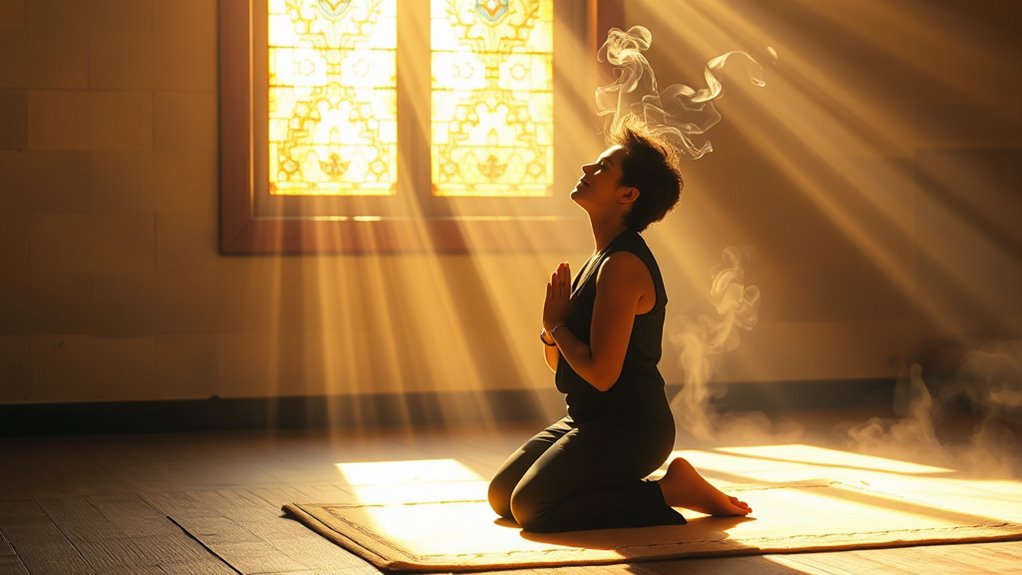
In exploring the emotional dimensions of prayer, you’ll find it serves as a profound personal connection with the divine.
This intimate act often invites vulnerability, allowing you to express fears and hopes openly.
Additionally, prayer can facilitate healing through reflection, enabling you to process complex emotions and experiences.
Personal Connection With Divinity
Prayer serves as a profound bridge connecting individuals to a higher power, fostering an emotional landscape rich with personal significance.
Through sacred communication, you engage in a divine dialogue that nurtures spiritual intimacy and creates a heartfelt connection with the divine presence. This transcendent experience allows for personal devotion and soul alignment, inviting you to express your faith authentically.
In your inner sanctuary, prayer becomes an essential tool for cultivating this relationship, deepening your understanding of existence and purpose.
Ultimately, it transforms routine moments into profound encounters, enriching your life with a sense of belonging to something greater than yourself.
Expression of Vulnerability
Opening your heart in prayer reveals a profound expression of vulnerability, allowing you to confront your fears, hopes, and uncertainties. This act of vulnerability in prayer invites you to lay bare your innermost struggles before a higher power, fostering an authentic connection.
By expressing fears, you acknowledge your limitations, which can be both liberating and transformative. Embracing this vulnerability not only deepens your spiritual experience but also cultivates resilience.
In moments of honesty, you may discover insights that lead to personal growth, fostering a sense of peace and acceptance in the face of life’s challenges. Ultimately, vulnerability enriches your prayer journey.
Healing Through Reflection
While engaging in prayer, you often find a sanctuary for reflection, where emotional healing can unfold.
Through reflective meditation, you invite healing energy into your life, facilitating emotional release. This practice nurtures mindful awareness, allowing you to confront and process unresolved feelings.
As you explore deeper, you may uncover spiritual insights, guiding you toward inner peace. This journey of self-discovery becomes a transformative experience, revealing the layers of your emotional landscape.
Prayer as a Form of Meditation
Engaging in prayer can serve as a profound form of meditation, allowing individuals to cultivate a deeper connection with their inner selves and the universe.
By incorporating mindful breathing, you can center your thoughts and enhance your focus during prayer. This practice helps quiet the mind, creating a space for reflection and insight.
Additionally, visualization techniques can deepen your experience by enabling you to envision specific intentions or divine connections.
Through these methods, prayer transforms into a meditative state, fostering tranquility and awareness.
Ultimately, this blend of prayer and meditation nurtures spiritual growth and personal understanding.
The Connection Between Prayer and Spirituality
Prayer and spirituality are intricately intertwined, each enriching the other in profound ways. Through prayer, you cultivate a mindful connection to the divine, fostering spiritual awakening and inner peace.
This heart-centered communication opens doors to intuitive understanding and divine guidance, allowing you to experience a transcendental experience that transcends ordinary existence.
In sacred silence, your soul aligns with universal consciousness, deepening your faith expression and enriching your spiritual journey.
Embracing this connection encourages reflection and growth, enabling you to navigate life’s complexities with greater clarity and purpose.
Ultimately, prayer serves as a bridge to your spiritual essence, nurturing your inner landscape.
Prayer in Various Religious Traditions
When exploring the diverse expressions of prayer across various religious traditions, you’ll find that each culture uniquely interprets this sacred act.
In Christianity, prayer often embodies a personal relationship with God, whereas in Buddhism, it serves as a meditative practice fostering mindfulness. Each tradition employs spiritual symbolism, whether through rituals, sacred texts, or communal gatherings, enriching cultural expressions of faith.
Islamic prayers, performed five times daily, emphasize discipline and devotion, while Indigenous practices may honor ancestors and nature.
These varied approaches illustrate how prayer transcends mere communication, becoming a profound reflection of belief systems and cultural heritage.
The Impact of Prayer on Mental Health
While many people may not realize it, the practice of prayer can greatly influence mental health and well-being. Engaging in prayer often incorporates mindfulness techniques, allowing you to center your thoughts and feelings.
This focused attention fosters emotional regulation, helping you manage stress and anxiety more effectively. Studies suggest that regular prayer can create a sense of peace, reduce depressive symptoms, and enhance overall emotional resilience.
Personal Growth Through Prayer
Through prayer, you can enhance your spiritual connection, fostering a deeper understanding of your beliefs and values.
This practice also cultivates inner strength, enabling you to face challenges with resilience.
Enhancing Spiritual Connection
As you engage in prayer, you create a profound opportunity for personal growth and spiritual connection that transcends mere words.
Through spiritual rituals, you invite a deeper awareness of your inner self and your relationship with the divine. This practice fosters divine communication, allowing you to express gratitude, seek guidance, and cultivate mindfulness.
Each prayer serves as a bridge, connecting you to a higher purpose and enriching your spiritual journey. By committing to this transformative dialogue, you enhance your understanding of life’s complexities, fostering a sense of belonging within the universe and nurturing your capacity for empathy and compassion toward others.
Developing Inner Strength
When you engage in prayer, you tap into a reservoir of inner strength that can profoundly influence your personal growth.
This practice nurtures inner resilience and fosters spiritual fortitude, enabling emotional empowerment and mental clarity. Through prayer, you commence on a journey of self-discovery, uncovering layers of your identity while cultivating personal resolve.
It encourages a mindful presence, allowing you to confront challenges with grace and poise. As you embrace this practice, you’ll find a path to inner peace, transforming your experiences into opportunities for growth.
Ultimately, prayer becomes a powerful tool for developing the strength you need to thrive.
Cultivating a Prayer Practice
Cultivating a prayer practice can greatly enhance your spiritual life, offering a structured way to connect with the divine and reflect on your thoughts and feelings.
By establishing ritual consistency, you create a foundation that nurtures your spiritual growth. This consistency helps you engage more deeply, fostering mindful engagement with your prayers.
Consider setting aside specific times each day to pray, allowing your practice to become a cherished routine. As you maintain this discipline, you’ll likely find that your connection to the divine strengthens, enriching both your understanding of prayer and your inner landscape.
Embrace this transformative journey.
The Science Behind Prayer
Establishing a prayer practice not only nurtures spiritual growth but also invites inquiry into its underlying mechanisms.
Scientific studies reveal that prayer can induce significant psychological effects, such as reduced anxiety and enhanced emotional resilience. When you engage in prayer, your brain may experience shifts in neural activity, promoting a sense of calm and focus.
Researchers have found that regular prayer correlates with improved well-being and coping strategies, suggesting a profound interaction between spirituality and mental health.
Prayer as a Communal Activity
When you engage in communal prayer, you tap into shared spiritual connections that enhance the experience for everyone involved.
The collective intentions and focus of the group amplify the energy and purpose of the prayer, creating a profound sense of unity.
This strength in unity not only fosters individual growth but also deepens the bonds within the community.
Shared Spiritual Connections
While many people perceive prayer as a solitary practice, it often serves as a profound communal activity that fosters shared spiritual connections among participants.
Engaging in group meditation or shared rituals creates opportunities for spiritual bonding and nurtures a collective consciousness. These moments facilitate interfaith dialogue, enriching community support and enhancing mutual understanding.
As you connect with others through prayer, you experience transcendent experiences that deepen empathetic connections. United intentions transform individual prayers into a powerful communal force, amplifying the emotional and spiritual resonance within your community.
Ultimately, prayer as a shared endeavor cultivates a sense of belonging and shared purpose.
Collective Intentions and Focus
Building on the idea of shared spiritual connections, collective intentions in prayer amplify the impact of individual beliefs and desires.
When you engage in group meditation or synchronized prayers, you tap into a profound group synergy, fostering a collective consciousness that enhances spiritual alignment.
This unified energy, generated through communal focus and shared intentions, creates a powerful atmosphere for transformation.
As you join others in prayer, the combined strength of your intentions elevates the experience, making it more meaningful.
This synergy not only deepens your connection with the divine but also reinforces the bonds among participants, enriching your spiritual journey.
Strength in Unity
Unity in prayer fosters a profound sense of community, transforming individual supplications into a collective experience that resonates deeply within participants.
When you engage in collective prayer, you tap into communal strength, amplifying your united intentions. This shared faith cultivates spiritual solidarity, enhancing group meditation and joint reflection.
Through partnership in prayer, you contribute to collective healing, fostering an environment of community support where individuals feel connected and uplifted.
The power of communal prayer lies in its ability to bind hearts and minds, creating a sanctuary of hope where everyone’s voices harmonize, reinforcing the belief that together, you can overcome life’s challenges.
Overcoming Doubts in Prayer
Doubts in prayer are something many people experience, and acknowledging these feelings is the first step toward overcoming them.
Effective doubt management involves recognizing when uncertainty arises and examining its roots. You can enhance prayer clarity by focusing on your intentions and beliefs, allowing for a deeper connection.
Reflect on past experiences where prayer has provided comfort or guidance, reinforcing your faith. By embracing vulnerability, you create space for growth and understanding.
The Language of Prayer
While many may view prayer as a simple act of communication with the divine, the language of prayer encompasses a rich tapestry of expression that reflects individual beliefs, cultural backgrounds, and personal experiences.
You’ll find that sacred language often forms the core of prayer expressions, shaping how you articulate your thoughts and emotions. This language can be formal, informal, poetic, or even spontaneous, depending on your spiritual context.
Prayer in Times of Crisis
When faced with crises, individuals often turn to prayer as a source of solace and strength, recognizing its capacity to provide comfort in turmoil.
Engaging in prayer techniques, such as focused meditation or structured requests for guidance, can enhance emotional resilience. These methods serve as effective crisis support, allowing you to articulate fears and aspirations while fostering a sense of connection to something greater.
As you navigate through uncertainty, prayer can cultivate inner peace, helping you process complex emotions and find clarity.
Ultimately, it becomes an essential tool for grounding yourself amid life’s unpredictable challenges, reinforcing hope and purpose.
Gratitude and Prayer
After maneuvering through crises, many find that incorporating gratitude into their prayer practice enhances its impact.
Embracing a thankful mindset, you can deepen your spiritual appreciation and experience significant prayer benefits. Gratitude expressions during prayer rituals foster connection and mindfulness, allowing for profound gratitude reflections.
Engaging in prayer journaling, you articulate prayer intentions and explore gratitude affirmations, which cultivate a consistent practice of mindful gratitude. This intentional focus on appreciation not only enriches your spiritual journey but also encourages resilience, transforming challenges into opportunities for growth.
Ultimately, gratitude interwoven with prayer nurtures a holistic sense of well-being and connection.
Prayer and Forgiveness
Forgiveness often emerges as an essential theme within prayer, serving as a pathway to healing and reconciliation.
When you engage in forgiveness as prayer, you invite transformative energy into your spiritual practice. This act of prayerful forgiveness isn’t merely about letting go; it’s about understanding and compassion.
By seeking to forgive, you create space for personal growth and emotional release, allowing resentment to dissipate. In this sacred dialogue with the divine, you cultivate empathy, fostering deeper connections with yourself and others.
Ultimately, prayer and forgiveness intertwine, guiding you toward a more harmonious existence and enriching your spiritual journey.
The Future of Prayer in a Modern World
As society evolves with rapid technological advancements and shifting cultural norms, the future of prayer is poised to reflect these changes, adapting to meet the needs of contemporary individuals.
Digital prayer through prayer apps fosters prayer accessibility, allowing you to engage in modern rituals anytime, anywhere. These tools can enhance prayer mindfulness, helping you connect with your intentions deeply.
Additionally, virtual communities encourage inclusive prayer, bringing together diverse voices for global prayer initiatives and prayer activism.
As you navigate this landscape, expect prayer technology to become an integral part of your spiritual journey, enriching your experiences and fostering deeper connections.
Finding Your Unique Prayer Style
In a world increasingly shaped by technology, the search for a personal prayer style becomes essential. You can explore diverse prayer expressions that resonate with your spirit.
Consider innovative prayer forms and creative prayer methods that align with your beliefs. Tailored prayer approaches allow for customized prayer styles, ensuring your communication with the divine feels authentic.
Investigate individualized prayer practices, mixing personal prayer techniques that invite deeper connection. Embrace unique prayer expressions that reflect your journey, and experiment with various practices.
Ultimately, finding your unique prayer style enriches your spiritual experience, fostering a profound relationship with the sacred.
FAQs
Can Anyone Pray, or Is It Limited to Specific Religious Groups?
You might wonder if prayer’s accessibility is limited to particular religious groups.
However, prayer offers universal accessibility, allowing anyone to engage in this practice. It’s a deeply personal connection, fostering relationships with the divine or one’s inner self.
Regardless of religious affiliation, individuals can embrace prayer as a means of reflection, solace, or guidance.
Ultimately, it’s about your intention and desire for connection, transcending boundaries and inviting all to participate in this profound experience.
How Do I Know if My Prayers Are Being Answered?
You might notice your prayers are answered through various signs that resonate with your experiences.
Sometimes, you’ll find clarity in unexpected ways or receive help that aligns with your requests. Pay attention to changes in your circumstances or feelings of peace after praying.
Often, answered requests manifest subtly, guiding you toward what you truly need rather than what you want. Reflecting on these moments can deepen your understanding of how your prayers connect with your life.
Is There a Right or Wrong Way to Pray?
There isn’t a definitive right or wrong way to pray; it’s deeply personal. You might explore various prayer techniques, like structured prayers or spontaneous expressions. Each method can foster a unique connection, so consider what resonates with you.
Personal prayer should feel authentic, allowing you to express your thoughts and emotions freely. Reflect on your experiences and adapt your approach, since the essence of prayer lies in sincerity and intention, not strict rules.
Can Prayer Be Effective Without Belief in a Higher Power?
You might wonder if prayer can be effective without belief in a higher power. Engaging in prayer as a spiritual practice can still foster personal reflection and introspection.
Even without a deity, the act of articulating thoughts and emotions may lead to a deeper understanding of oneself and one’s desires. This process can facilitate emotional release and clarity, highlighting that the efficacy of prayer often resides in the intention behind it, rather than the belief itself.
How Can I Incorporate Prayer Into a Busy Lifestyle?
Incorporating prayer into your busy lifestyle requires intentionality and creativity. You can start by using prayer techniques like short, focused prayers during mindful moments throughout your day—perhaps while commuting or during lunch breaks.
Set reminders to pause and reflect, creating space for connection. Even a few minutes of gratitude or intention can deepen your spiritual practice, helping you remain grounded amidst life’s demands.
Embrace these moments, and you’ll find prayer enriching your daily routine.
Conclusion
In understanding the full meaning of prayer, you recognize it as a multifaceted practice that transcends mere words. It fosters personal growth, nurtures emotional well-being, and strengthens communal ties. By exploring various types and intentions behind prayer, you can cultivate a deeper connection to the divine and yourself. As you navigate the complexities of modern life, embracing your unique prayer style can lead to transformative experiences, ultimately enriching your spiritual journey and enhancing your overall sense of peace.